
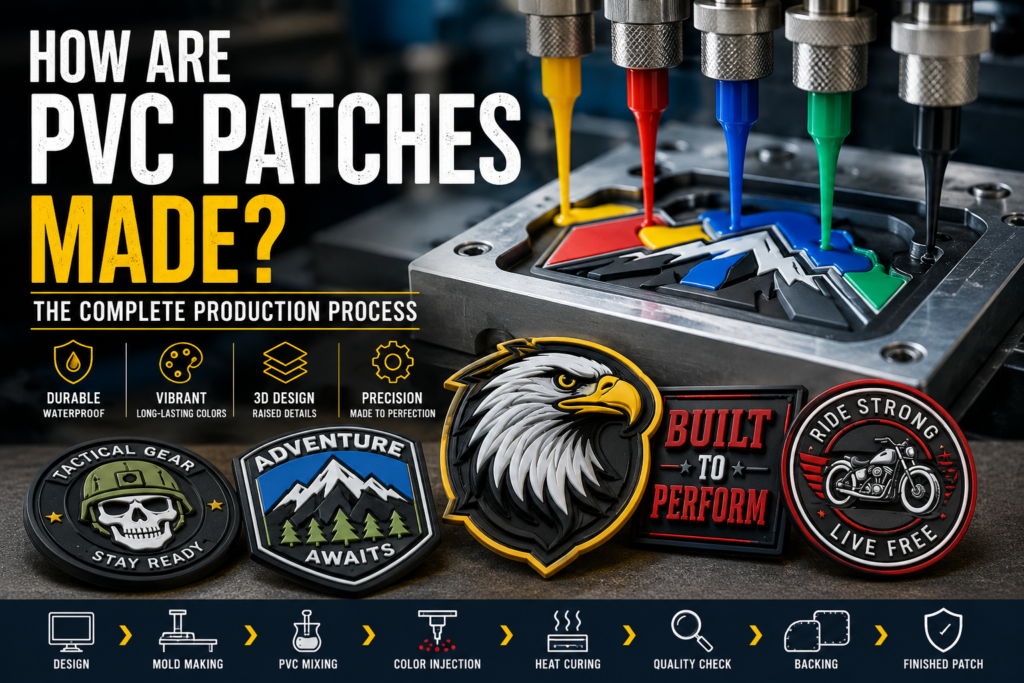
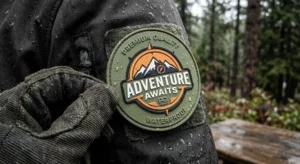
Ever looked at a rubbery, glossy patch on a jacket and wondered how it got its bounce, its color, and its stubborn refusal to fade? That’s a PVC patch, and its journey from raw plastic pellet to wearable art is more interesting than most people expect.
At Premium Quality Patches, we manufacture custom PVC patches every day, and we get this question a lot: “What actually happens inside the factory?” This guide breaks down the real production process, step by step, no fluff, no guesswork.
What Are PVC Patches Made Of?
PVC stands for polyvinyl chloride, a soft, flexible plastic that manufacturers melt, mold, and cure into shape. Unlike embroidery thread or woven fabric, PVC starts as a liquid compound. That’s the whole trick behind flexible PVC patches: liquid plastic takes the shape of whatever mold it’s poured into.
The material resists water, dirt, and sun damage far better than fabric does. You could leave a PVC patch out in the rain for a season, and it would still look ready for its close-up.
Step 1: Turning Artwork Into a Digital Blueprint
Every custom PVC patch starts as a design file, usually created in vector software like Illustrator. Designers map out the shape, colors, text, and any raised or recessed details.
This step matters more than people assume. A clean vector file becomes the blueprint for the mold, so mistakes here follow the patch through the rest of production. Our team reviews every proof before it moves forward, because nobody wants a typo permanently baked into rubber.
Step 2: Building the Mold
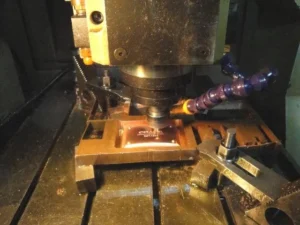
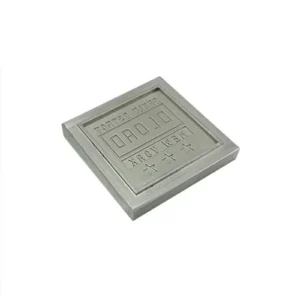
Once the design gets approval, it becomes a mold, typically carved from steel or aluminum using CNC or CAD-guided machines. This mold defines the outline, the depth, and every raised element the patch will have.
Custom 3D PVC patches need extra attention here, since the mold must capture multiple height levels to create that raised, sculpted look. Flat, 2D patches use simpler single-layer molds, which usually keeps costs lower.
Manufacturers often build molds with multiple cavities. That means several patches get produced from a single pour, which speeds up larger orders like pvc patches wholesale runs.
Step 3: Mixing the PVC Compound
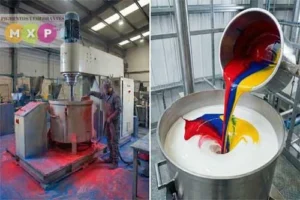
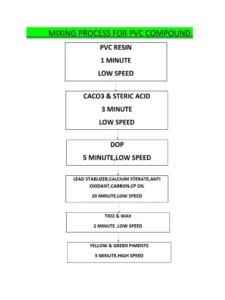
Here’s where the chemistry kicks in. Workers mix PVC powder with plasticizers, stabilizers, and colorants in specific ratios. The plasticizer keeps the final product flexible instead of brittle, and the stabilizer helps it hold its shape under heat and sunlight.
The mixture gets heated until it turns into a smooth, pourable liquid. Air bubbles get vacuumed out at this stage too, since trapped air creates weak spots and ugly surface defects.
Step 4: Injecting Color, Layer by Layer
This is the fun part to watch. Machines (or, for smaller runs, skilled technicians) inject different colors of liquid PVC into separate sections of the mold, following the design’s color map exactly.
Because each color fills its own defined space, the patch doesn’t need extra printing to look sharp. This is also how custom 3D PVC patches get their raised sections: multiple pours build up height and texture, one layer at a time.
Step 5: Curing and Hardening
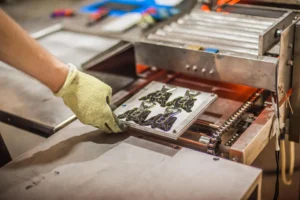
Filled molds move into an oven or heat press, where controlled temperatures cure the liquid PVC into a solid, rubbery patch. Curing times and temperatures vary by design complexity and patch thickness.
Once cured, the patch holds its shape permanently. It won’t melt back down or lose its form, which is exactly why PVC patches survive years of wear, wash cycles, and weather.
Step 6: Trimming and Quality Control
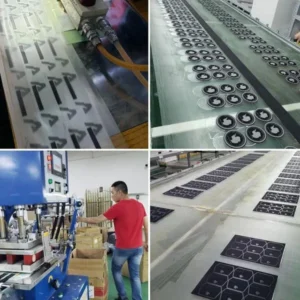
After the patches cool, workers pop them out of the mold and trim away any excess material along the edges. Then comes inspection: checking color accuracy against Pantone references, verifying edge quality, and confirming that raised details came out crisp.
Any patch with a bubble, a smudge, or a misaligned color gets pulled from the batch. Quality control isn’t a formality; it’s the difference between a patch that looks premium and one that looks like a rushed knockoff.
Step 7: Adding the Backing
The final step turns a molded shape into a usable product. Common backing options include:
Hook and loop (Velcro) — popular for tactical gear and swappable patches
Iron-on backing — quick application with a household iron
Sew-on backing — the most secure option for uniforms and heavy-use apparel
Adhesive backing — peel and stick, great for smooth surfaces
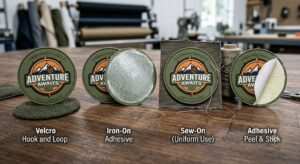
Custom PVC Velcro patches with no minimum order have become especially popular with small businesses and startups that want a professional look without committing to bulk quantities. We also handle custom rubber Velcro patches and custom PVC rubber patches for teams that want the same durable feel with a slightly different finish.
Why Businesses Choose PVC Over Other Patch Types
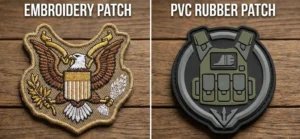
Embroidered patches look classic, but they fray. Woven patches handle fine detail, but they still use thread. PVC patches skip both problems entirely.
They resist moisture, they hold vivid color without fading, and they can include 3D texture that other methods simply can’t replicate. For logos with sharp edges, gradients, or bold outlines, custom PVC patches usually outperform fabric-based alternatives.
How Premium Quality Patches Manufactures Your PVC Patches
At Premium Quality Patches, we handle the entire process in-house: design review, precision mold-making, color-matched injection, curing, and backing attachment. Every custom made PVC patch goes through manual quality checks before it ships, not just an automated scan.
We produce everything from single sample patches to large PVC patches wholesale orders, and we support custom PVC Velcro patches no minimum for smaller businesses testing a new design. Whether you need custom 3D PVC patches with heavy texture or flat, simple logos, our production line adjusts to the design, not the other way around.
Ready to Order Your Custom PVC Patches?
You don’t need a factory to get factory-quality patches. Send us your logo or design idea, and our team will handle mold creation, color matching, and production from start to finish.
Get a free quote from Premium Quality Patches today and see how affordable custom PVC patches can be, no matter your order size.