Converting artwork into embroidery digitizing is not just a design task. It is a technical process that turns creative visuals into stitch-ready files that embroidery machines can understand. If done right, your design looks clean, sharp, and professional on patches, apparel, and promotional products. If done wrong, the final result can look messy, distorted, or completely unreadable.
In this guide, we will explain how to convert artwork into perfect embroidery digitizing in a practical, human way. We will also cover common mistakes, expert tips, and how professional services like Premium Quality Patches help brands achieve high-quality results.
What Is Embroidery Digitizing?
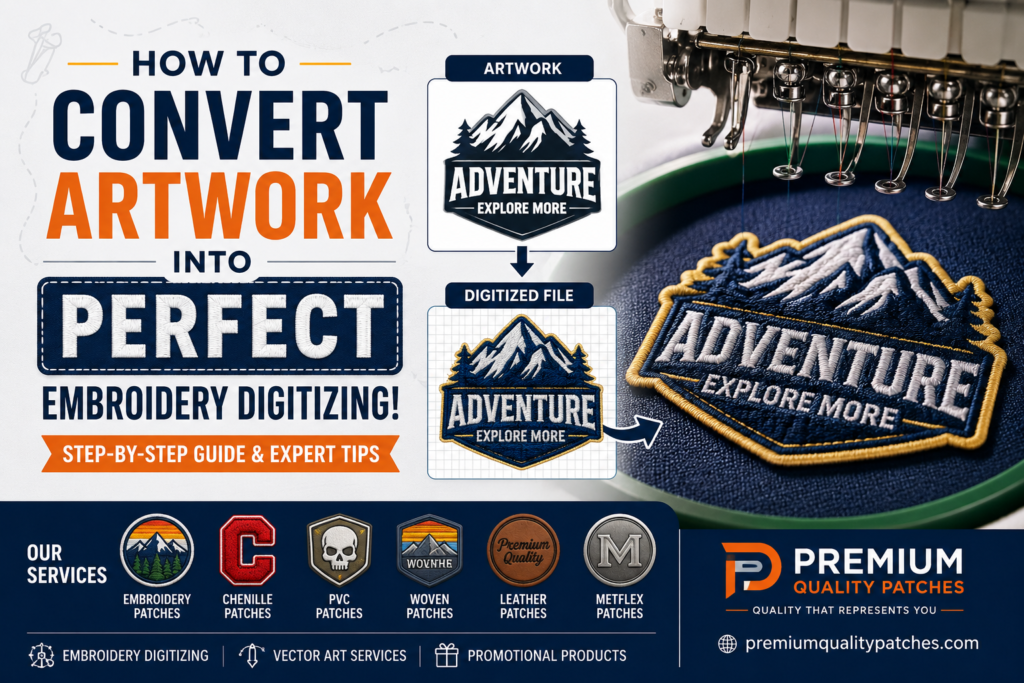
Embroidery digitizing is the process of converting artwork (like JPG, PNG, or vector files) into a stitch file that embroidery machines can read.
These stitch files control:
- Stitch direction
- Stitch type (satin, fill, run stitch)
- Stitch density
- Thread color mapping
In simple words, digitizing is the “translation” between your artwork and the embroidery machine. Without proper digitizing, even the best logo can look broken on fabric.
Embroidery digitizing is widely used for:
- Custom patches
- Corporate branding
- Sports uniforms
- Promotional merchandise
Step-by-Step: How to Convert Artwork into Embroidery Digitizing
Let’s break down the real process professionals use.
Step 1: Analyze the Artwork
Every digitizing project starts with analyzing the design.
Ask:
- Is the artwork simple or complex?
- Are there small details or thin lines?
- What size will the final embroidery be?
A logo that looks good on a website may need simplification before digitizing.
Step 2: Convert Artwork into Vector Format
Most embroidery digitizing begins with vector conversion (if the file is not already vector).
Vector files help:
- Maintain clean shapes
- Scale without losing quality
- Separate color layers easily
Common formats:
- AI
- EPS
- SVG
This step ensures the artwork is “digitizer-friendly.”
Step 3: Choose the Right Stitch Types
Different parts of the design require different stitch types:
- Satin stitch → Best for borders and text
- Fill stitch → Best for large areas
- Run stitch → Best for fine outlines
Choosing the right stitch type is the backbone of embroidery digitizing.
Step 4: Set Stitch Density and Direction
This step controls the tightness or looseness of the embroidery.
- High density = stronger but heavier design
- Low density = lighter but may look thin
Stitch direction also affects:
- Shine
- Texture
- Visual depth
Professional digitizers always balance density to avoid fabric puckering.
Step 5: Assign Thread Colors
Embroidery machines use thread color codes, not digital colors.
A digitizer:
- Matches colors to thread charts
- Adjusts shades for fabric contrast
- Ensures consistency in production
Step 6: Test and Finalize the Design
Before final production, a test stitch-out is often done.
This helps identify:
- Misalignment
- Thread breaks
- Poor edges
- Design imbalance
After making the necessary corrections, the final file is ready for production.
Common Mistakes in Embroidery Digitizing
Even experienced designers make mistakes. Here are the most common ones:
1. Overly Complex Designs
Too many details often fail in embroidery. Simplicity wins.
2. Ignoring Fabric Type
Cotton, denim, and polyester behave differently.
3. Wrong Stitch Density
Too dense causes thread breaks. Too loose reduces quality.
4. Skipping Test Runs
Without testing, small issues become big production problems.
Expert Tips for Perfect Embroidery Digitizing
Here are some practical tips professionals use:
- Always simplify artwork before digitizing
- Avoid very small text (below 4–5 mm height)
- Use bold shapes instead of thin lines
- Match design complexity with fabric type
- Keep color changes minimal for efficiency
These small improvements can significantly enhance the final embroidery quality.
Why Choose Professional Embroidery Digitizing Services?
While software tools exist, embroidery digitizing is not fully automated. It requires experience, artistic judgment, and technical understanding.
Professional services ensure:
- Clean stitch paths
- Machine-friendly files
- Reduced production errors
- High-quality final output
At Premium Quality Patches, embroidery digitizing is handled with attention to detail, ensuring your artwork is transformed into production-ready stitch files.
Our Services: More Than Just Digitizing
Along with embroidery digitizing, we specialize in a wide range of custom manufacturing and branding solutions:
Custom Patch Manufacturing
We produce:
- Embroidery patches
- Chenille patches
- PVC patches
- Silicone patches
- Woven patches
- Leather patches
- Metflex patches
Each patch type is designed for different branding needs, from fashion to corporate identity.
Promotional Products
We also create:
- Custom keychains
- Enamel pins
- Printed pins
- Challenge coins
These products help businesses build strong brand visibility in a competitive market.
Vector Art Services
We convert low-quality images into clean vector files suitable for:
- Embroidery
- Printing
- Large-scale branding
Embroidery Digitizing Services
We ensure every design is:
- Machine-ready
- Scalable
- Production-optimized
All services are designed to help brands maintain professional quality across every product.
How Artwork Conversion Improves Your Brand Identity
High-quality embroidery is not just decoration—it is branding.
When your logo looks clean on uniforms or patches:
- Your brand looks more professional
- Customers trust your business more
- Your merchandise feels premium
Poor digitizing, on the other hand, can damage brand perception instantly.
That’s why investing in proper embroidery digitizing is not optional—it is essential.
Final Thoughts
Converting artwork into embroidery digitizing is a mix of creativity and technical precision. It requires understanding stitch behavior, fabric response, and design simplification.
If you follow the right process, analyze artwork, vectorize it, choose the correct stitches, adjust density, and test thoroughly, you can achieve professional-quality embroidery every time.
For businesses looking for reliable results, working with experts like Premium Quality Patches ensures that every design is handled with care, accuracy, and industry-level expertise.